 Christophe Pronier
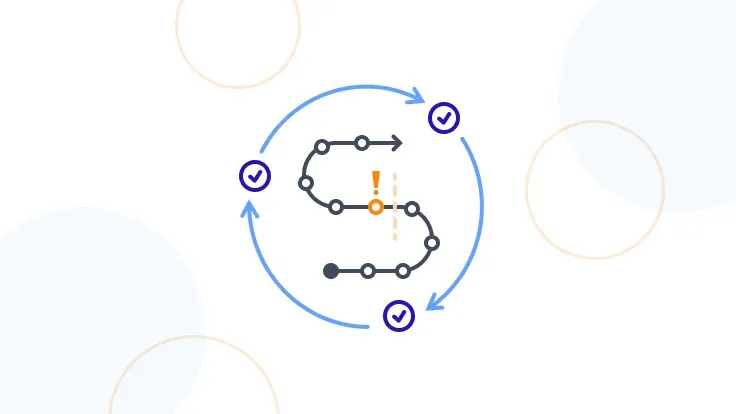
A high-severity incident kicks off. Adrenaline is pumping. An engineer, under pressure, quickly whitelists an IP in the WAF to unblock critical traffic. The immediate crisis passes, but in the rush to restore calm, that temporary override is never reverted. Weeks or months later, that forgotten change becomes a wide-open door for an attacker, or worse, silently introduces a bug that costs your business real money. Sound familiar? You’ve just experienced configuration drift.
In web security and edge operations, where every configuration change directly impacts live traffic, security posture, and cost, configuration drift isn’t just a minor annoyance—it’s a critical vulnerability and a silent drain on resources. It’s the insidious force that makes your meticulously planned security architecture diverge from its actual, operational state, leaving you exposed and scrambling.
What Is Configuration Drift?
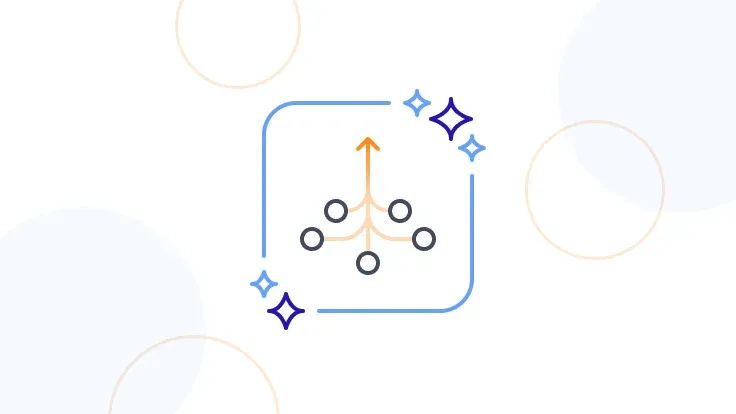
At its core, configuration drift is the gradual, often unnoticed, deviation of a system’s operational settings from its intended, secure baseline state. Imagine you defined a perfect set of WAF rules, CDN caching policies, or DNS records—your golden configuration. Configuration drift is what happens when, over time, the deployed reality no longer matches that ideal. It’s a problem that affects every layer of IT infrastructure, from servers and databases to containers and cloud environments. But in the high-stakes world of web security and edge platforms, its consequences are particularly severe. Your WAF rules, bot management policies, CDN headers, and DNS records are your first line of defense and performance. When these configurations drift, they don’t just introduce inefficiency; they introduce risk that bypasses your security perimeter entirely.
What Causes Configuration Drift?
You’re not alone if you’re battling configuration drift. It’s a common adversary in complex environments, often stemming from a mix of human factors, systemic issues, and the sheer complexity of modern web infrastructure. Understanding these root causes is the first step toward regaining control.
Manual Changes and Emergency Fixes
We’ve all been there: a critical incident demands immediate action. You log directly into a Cloudflare dashboard, an Akamai control panel, or modify a Fastly VCL file to push a fix. The problem is, these direct, manual interventions, while necessary in the heat of the moment, rarely get formally documented or reverted. The temporary WAF bypass rule, the disabled rate limit, the modified cache header—these often linger, becoming undocumented exceptions that degrade your security posture over time. It’s the single most common culprit for drift in the edge security world.
Software Updates and Patches
Sometimes, drift happens without anyone on your team touching a thing. Vendors push updates, apply patches, or silently roll out new default behaviors. While often beneficial, these changes can inadvertently alter how your existing configurations behave or introduce new, unexpected settings that deviate from your established baseline. Unless you have continuous monitoring in place, these vendor-driven shifts can go unnoticed, creating subtle but impactful vulnerabilities.
Multi-Vendor Complexity
Modern web stacks are rarely monolithic. You might be running Cloudflare for WAF, Akamai for CDN, AWS Route 53 for DNS, and a host of other services. Each vendor has its own dashboard, API, and configuration paradigm. Managing consistent security policies and performance settings across this disparate landscape is a monumental task. What was configured for one CDN might not be replicated on another, or worse, conflicting policies can be introduced across different platforms, guaranteeing drift.
Lack of Version Control and Documentation
If your web security configurations aren’t treated like code, they’re drifting. Without proper version control (e.g., Git for your WAF rules or CDN configs) and rigorous documentation, changes are ephemeral. Who made what change, when, and why? If that information lives solely in someone’s memory, a Jira ticket that’s since been closed, or a fleeting Slack message, you have a drift problem that will inevitably lead to security gaps or performance degradation.
Team Knowledge Silos
In many organizations, specialized knowledge for different security tools resides with individual engineers or specific teams. The “CDN person” knows Fastly inside and out, while the “WAF expert” manages Cloudflare. When one makes a change without full visibility or understanding of how it impacts other components of the edge stack, unintended consequences—and configuration drift—are almost guaranteed. These silos make it nearly impossible to maintain a holistic, consistent security posture across your entire perimeter.
Why Is Configuration Drift Dangerous for Web Security?
When configurations drift in your web security and edge infrastructure, the implications extend far beyond mere inconvenience. You’re not just dealing with misaligned settings; you’re introducing tangible risks that directly threaten your business operations, security posture, and bottom line.
Security Gaps and Exposure
This is where configuration drift becomes a truly terrifying prospect for web security teams. A forgotten WAF bypass rule, an inadvertently opened port in a CDN firewall, an expired TLS certificate due to a mismanaged load balancer—these are not theoretical vulnerabilities. They are direct, exploitable security gaps that can lead to data breaches, unauthorized access, and sustained attacks. Attackers actively probe for these inconsistencies, knowing that drifted configurations are often blind spots for security teams. What you think is protected might actually be wide open.
Compliance Drift
For industries bound by regulations like PCI DSS, HIPAA, SOC 2, or GDPR, configuration drift isn’t just a technical issue; it’s a legal and financial liability. A change to a CDN header might inadvertently expose sensitive information, violating data privacy regulations. A WAF rule adjustment could cause compliance drift, falling out of compliance with mandated security controls. When an audit comes, your documented policies might look pristine, but the drifted reality of your production environment tells a different, non-compliant story, leading to hefty fines and reputational damage.
Operational Downtime and Increased MTTR
An unexpected outage hits. Traffic is down. Your team scrambles. The first question is always, “What changed?” With configuration drift, the answer is elusive. Did a CDN cache setting silently break an application? Did a DNS record get updated incorrectly? Diagnosing an incident when the baseline is unknown or inconsistent across systems significantly increases your Mean Time To Resolution (MTTR). Every minute of downtime translates directly to lost revenue and customer trust, all because a subtle, undocumented change went unnoticed.
Hidden Cost Increases
Configuration drift has a nasty habit of silently eating into your budget. A seemingly minor change to a cache policy on your CDN (Cloudflare, Akamai, Fastly) can lead to a significant increase in origin egress traffic. Disabled rate limiting could allow bot traffic to surge, increasing bandwidth and infrastructure costs. These aren’t one-time hits; they’re ongoing, stealthy expenses that only become apparent when you reconcile the next month’s astronomical bill, long after the change was made.
Loss of Visibility Across Your Stack
In a multi-vendor, complex web security environment, true visibility is gold. Configuration drift steals that visibility. When configurations are managed independently across various dashboards and teams, you lose the ability to see the holistic state of your security perimeter. You can’t assess your true risk, can’t validate compliance, and can’t confidently make changes because you don’t fully understand the current, actual configuration. This lack of a single source of truth blinds you to your own attack surface.
Real-World Examples of Configuration Drift
These aren’t hypothetical scenarios. These are the kinds of incidents that keep seasoned operators up at night, all traceable back to subtle configuration drift in the web security and edge layers.
The Undocumented WAF Bypass
During a DDoS attack, an engineer adds a temporary WAF rule on Cloudflare to whitelist a specific IP address or bypass a problematic rule for a critical application. The attack subsides, the application recovers, but the temporary rule is never removed. Four months later, a routine vulnerability scan, or worse, an actual attacker, discovers this forgotten bypass. The WAF, which was supposed to protect against SQL injection, is now effectively blind to traffic from that whitelisted IP, creating a gaping security hole that allows for data exfiltration or site defacement. Nobody knew the rule was still active.
The Silent Cache Cost Hike
A new feature deployment requires a slight tweak to caching behavior for a specific path on Fastly. An engineer, in a hurry, modifies a VCL snippet, intending it only for the new microservice. However, due to a subtle scope error or an overlooked interaction, the change inadvertently affects the global caching policy, significantly reducing the cache hit ratio for your entire application. Over the next billing cycle, your origin egress costs from AWS or GCP silently spike by 25%. It takes weeks to trace the issue back to that single, “temporary” VCL change, by which point you’ve incurred thousands in unexpected charges.
The DNS Record Tangle
A marketing team needs to test a new landing page on a regional subdomain. A junior engineer, lacking full context, manually adds a CNAME record in AWS Route 53, pointing it to an internal staging environment. The test concludes, but the CNAME is never cleaned up. Weeks later, the production application attempts to provision new resources in that region, and the persistent CNAME causes routing conflicts. What was meant to be a minor, temporary change creates a regional service outage for a critical application, unraveling a carefully orchestrated global deployment because of a single, forgotten DNS entry.
How to Detect and Prevent Configuration Drift
The good news is that configuration drift is not an unmanageable problem. With the right strategies, processes, and tooling, you can bring your web security and edge configurations back into alignment and keep them there. This isn’t about eliminating change; it’s about managing it with precision and confidence.
Establish a Secure Baseline
Before you can detect drift, you need a clear definition of what “correct” looks like. This means defining your desired state for every WAF rule, CDN policy, DNS record, and edge function. Treat these configurations as code. Document them, version control them, and make them your immutable “golden standard.” This baseline isn’t static; it evolves, but every intentional change to it should be a deliberate, documented process, not an accident.
Implement Continuous Monitoring
A baseline is useless if you’re not actively comparing your live environment against it. You need real-time monitoring that alerts you the moment a configuration deviates from its established standard. This goes beyond simple uptime checks; it’s about actively scanning and validating the actual deployed configurations on your CDNs, WAFs, and DNS providers. If a Cloudflare page rule changes or a Fastly header is modified, you need to know immediately, not weeks later during an audit or, worse, after an incident.
Automate Configuration Management
Where possible, remove manual intervention entirely. Use Infrastructure as Code (IaC) tools like Terraform or Pulumi to define and deploy your edge configurations. This ensures that changes are programmatic, repeatable, and version-controlled. For configurations that aren’t fully IaC-compatible, look for ways to script deployments or use APIs to enforce your baseline, reducing the human error factor inherent in dashboard clicks.
Centralize Multi-Vendor Visibility
The fractured nature of modern edge stacks—with different vendors for WAF, CDN, DNS, and more—is a primary driver of drift. You need a unified view. A single pane of glass that aggregates configurations and status from all your web security tools is essential. This allows you to see inconsistencies across your stack, identify dependencies, and manage policies holistically. Platforms like Lelops are built specifically to provide this centralized visibility and automated drift detection across diverse web security stacks, transforming fragmented management into a coherent strategy.
Enforce Change Documentation and RBAC
Every change, no matter how small or urgent, needs a clear audit trail. Who made the change, when, why, and what was its impact? Implement robust Role-Based Access Control (RBAC) to ensure that only authorized personnel can modify critical configurations, and that those modifications are logged. This process creates accountability and ensures that even emergency fixes are eventually reconciled with your documented baseline.
Configuration Drift Management Tools: What to Look For
Navigating the landscape of configuration drift management tools can be daunting, but for web security and edge operations, specific capabilities are non-negotiable. You’re not just looking for a generic infrastructure tool; you need one that understands the nuances of CDNs, WAFs, and DNS.
Key capabilities include:
- Real-time Monitoring: Instant alerts the moment a configuration deviates from its baseline.
- Multi-Vendor Support: The ability to integrate with and manage configurations across diverse platforms like Cloudflare, Akamai, Fastly, AWS CloudFront, and Route 53.
- Automated Baseline Comparison: Continuously checks current state against your defined desired state without manual effort.
- Granular Alerting: Customizable notifications for specific types of drift, ensuring the right teams are informed.
- Rollback Capability: The power to quickly revert to a known good configuration after drift is detected.
- Comprehensive Audit Trails: A full history of who changed what, when, and where across your entire edge stack.
Many general-purpose configuration management tools exist, but few offer the specialized focus required for web security and performance infrastructure. Lelops’s approach emphasizes continuous compliance and automated drift detection tailored specifically for edge-specific needs, offering a proactive solution to a pervasive problem. It’s about moving beyond reactive fire-fighting to preventative security posture management.
FAQ
What is configuration drift in simple terms?
Configuration drift, in simple terms, is when the settings or configurations of a system gradually change over time from their original, intended, or secure state. It often happens without direct intent or proper documentation, leading to inconsistencies and unexpected behavior in live environments.
What is the difference between configuration drift and configuration sprawl?
Configuration drift refers to a single system’s configuration deviating from its established baseline. Configuration sprawl, conversely, describes a situation where an organization has an excessive number of unmanaged, redundant, or inconsistent configurations across many different systems, making overall management chaotic.
How does configuration drift affect compliance?
Configuration drift can severely impact compliance by subtly introducing settings that violate regulatory standards (e.g., PCI DSS, HIPAA). These unapproved changes can expose sensitive data, weaken security controls, and lead to non-compliance during audits, resulting in significant fines and reputational damage for the organization.
Can configuration drift be completely prevented?
While human error and dynamic environments make complete, 100% prevention of configuration drift challenging, its impact can be significantly minimized. Implementing robust processes, leveraging automation, establishing clear baselines, and maintaining continuous monitoring are key strategies to detect and mitigate drift effectively before it causes harm.
What tools help manage configuration drift?
Tools that help manage configuration drift span several categories, including Infrastructure as Code (IaC) platforms like Terraform, configuration management tools such as Ansible, and specialized drift detection and remediation platforms. For web security and edge infrastructure, tools focused on real-time monitoring and multi-vendor support for CDNs, WAFs, and DNS are particularly crucial, like Lelops.
See how Lelops detects and prevents configuration drift across your web security stack: https://www.lelops.ai